32095
Thermador Ice Maker and Scale Faults in Palencia
Palencia kitchens went in with the houses, so most of what we open is somewhere between its first and second decade. That decides what fails and what it costs.
Mon–Fri 8:00am – 6:00pm Sat 9:00am – 4:00pm
St. Augustine, FL · St. Johns County
Independent Thermador service · St. Augustine, FL
dishwashing
Circulation, drainage, heat and door seal are the four things that can be wrong. We test each in the order that costs least and quote before we start.
Flat $80 diagnostic, credited toward the repair when you approve the work.
Dishwashing
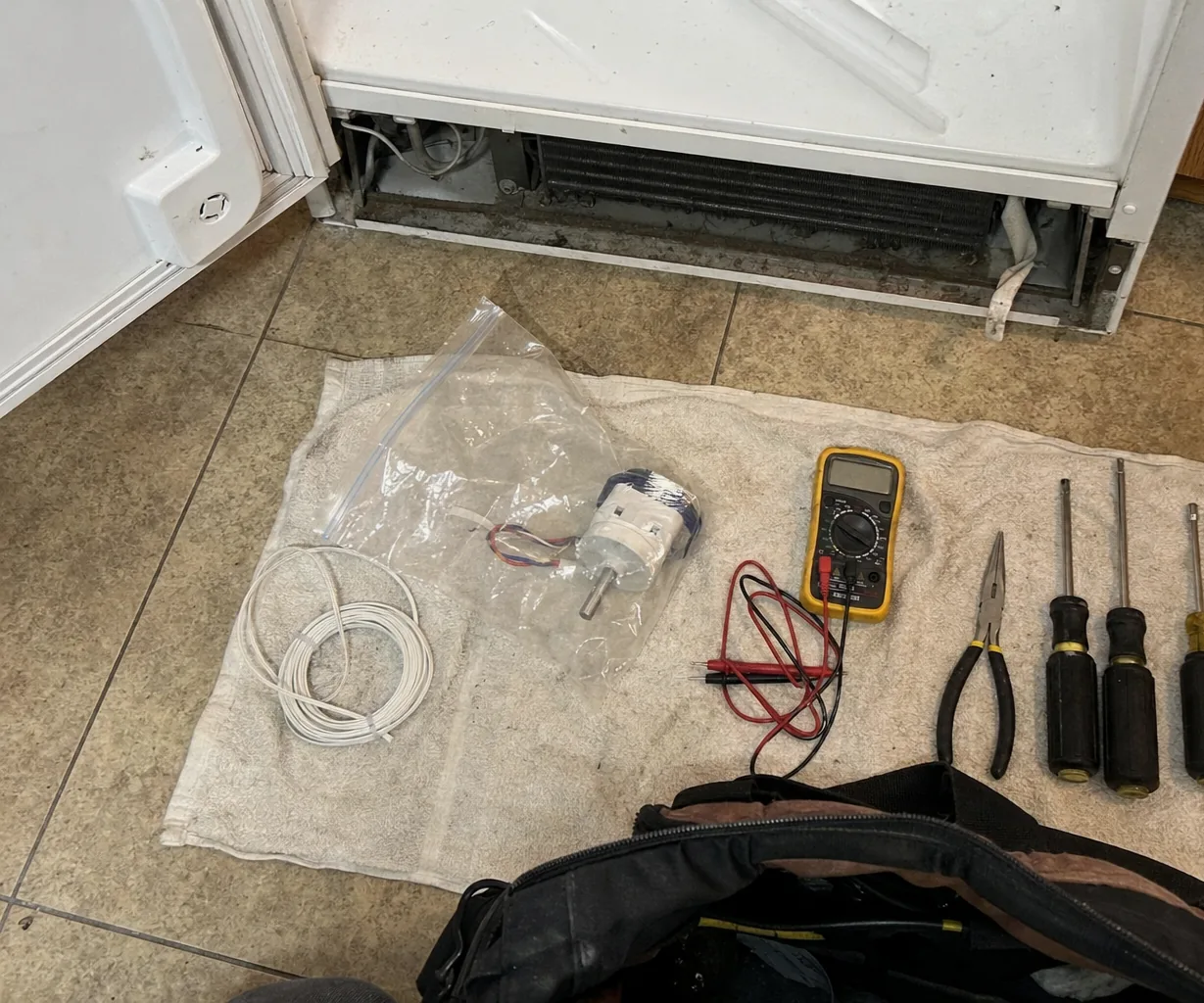
Most dishwasher calls end at the drain path, the sump or the door seal. The towel goes down first because the water has to come out somewhere.
What brings us out
Scope of work
Cloudy glass is the complaint we hear most, and it is usually not a broken machine at all. Two completely different things produce it, they look identical on the shelf, and they have opposite solutions — so the first useful thing a technician can do is tell you which one you have rather than sell you a pump.
There is a quick test worth doing before you call anyone. Soak one cloudy glass in white vinegar for a few minutes. If the film lifts, it is mineral deposit and the fix is water treatment, rinse aid and a hotter wash. If the cloudiness stays, the glass is etched, which is permanent damage and comes from the opposite problem — too much detergent in water that is not hard enough to consume it. Those two look identical on the shelf and have opposite solutions.
The parts that fail here fail from the same cause. Spray arm holes narrow until the upper rack stops getting coverage. The heating element crusts over and can no longer bring the wash up to temperature, so detergent never fully activates. The drain path silts up and the machine finishes with water in the sump.
Those are all measurable. We check spray pattern with the arms off, read element resistance, confirm the drain pump moves water against a real head, and look at the sump and filter before condemning anything expensive.
The upper rack is the diagnostic canary. It is the furthest point from the pump and the first thing to suffer when circulation pressure drops, so a machine that cleans the bottom rack well and the top rack badly is telling you about pressure, not about detergent. The cause is usually a blocked upper spray arm, a choked feed tube at the back wall, or a circulation pump that has lost output.
Water in the sump at the end of a cycle has three usual causes and they are easy to separate. A drain pump that hums but does not move water has something in the impeller, very often a piece of glass or a fruit stone. A pump that is silent has lost its supply or its winding. And a machine that drains and then refills itself with dirty water does not have a pump problem at all — it has a drain hose without a high loop, siphoning back from the disposal or the standpipe.
That last one is an installation fault, not a failure, and it is common in two places: houses where the dishwasher was retrofitted into cabinetry built long before dishwashers, and brand-new construction where the hose was routed for convenience. Correcting the routing solves it permanently and costs less than any part.
Thermador dishwashers rely on the residual heat of a hot final rinse and on condensation against the stainless tub, not on a fan blowing hot air. That means poor drying is nearly always poor final-rinse temperature, an empty rinse aid reservoir, or plastic items that hold no heat. A heating element that has lost its output, or a thermistor reading high and satisfying the control early, both end the cycle before the load ever got hot enough to dry itself — which is how a heating fault arrives as a drying complaint.
A dishwasher door is a counterweighted assembly on springs or cables, and it is supposed to stay wherever you leave it. A door that drops open under its own weight has a broken cable or a spring that has lost tension, and it is worth fixing promptly, because the same slack lets the door hang low enough to strain the hinge mounts and eventually the tub flange.
Panel-ready fronts add a second variable. A custom door panel changes the weight the springs were set for, so a machine that closes badly after new cabinetry is often correctly adjusted for the wrong panel rather than broken. Spring tension on these is adjustable. A latch that will not catch is usually the same story seen from the other end — the door is no longer arriving square at the strike — and replacing the latch assembly without correcting the alignment buys a few months at most.
Older kitchens in the historic parts of the county — the 1900s to 1930s retrofits — often gained a dishwasher long after the cabinets were built. A machine shimmed level in a cabinet opening that is out of square will not seal at the door, and the leak it produces at the base gets blamed on the door seal through two or three replacements. Both are fixable in one visit once someone puts a level across the opening.
Flat $80 diagnostic credited toward the repair, a written estimate before any part is ordered, genuine OEM parts, 90 days on labor and 365 days on parts.
A dishwasher repair is quoted from the part that actually failed, and the one researched band we keep that applies to this machine is the electronics. A circulation or drain pump, a spray arm, a heating element, a door seal or a latch is a smaller job than the row below, and its firm figure is written down at the appliance after the diagnosis. The visit is credited toward whatever you approve.
| What gets replaced | Parts and labor |
|---|---|
| Control board or touch panel | $430–$1,090 |
Before any of that
$80
Flat $80 diagnostic covering the visit and the full diagnostic sequence, credited toward the repair once you approve the work.
You get a written estimate before any part is ordered or any labor is billed.
Where this comes up
32095
Palencia kitchens went in with the houses, so most of what we open is somewhere between its first and second decade. That decides what fails and what it costs.
32084
In the 32084 ZIP the coast sets the agenda: corroded condenser fins, seized hinges, and older kitchens that were never wired for what is now in them.
32092
The kitchens here are twenty to twenty-five years old. That one fact predicts most of what we find, and most of what is worth repairing rather than replacing.
32092
SilverLeaf appliances are young, so almost nothing we find here is wear. It is how the machine was installed, how it was commissioned, and what the opening allows.
4.5
out of 5, across 60 customer reviews. Each one is a single visit, in the words of the person whose kitchen it was.
The upper rack came out wet while the lower rack was dry. He found the heating element open and the thermistor drifting, replaced both, and ran a cycle through to check. Dry dishes top and bottom now.
Thaddeus O.
The upper rack rails had come apart and the rack tipped whenever it was loaded. He fitted new rails and adjusters on both sides and levelled the machine while he was under there. It rolls straight again.
Delia U.
The machine hummed away but never filled. He tested the inlet valve, found it electrically sound, and then found the supply stop half shut behind the cabinet after earlier plumbing work. He opened it and checked the fill rate anyway.
Lachlan E.