32080
Thermador Condenser Corrosion, Anastasia Island
Davis Shores, Marsh Creek and Sea Colony sit between the Matanzas River and the Atlantic. Corrosion is what shortens appliance life on a barrier island.
Mon–Fri 8:00am – 6:00pm Sat 9:00am – 4:00pm
St. Augustine, FL · St. Johns County
Independent Thermador service · St. Augustine, FL
refrigeration
Column and built-in refrigeration, including sealed-system work. Our technicians hold EPA Section 608 certification, which that work legally requires.
Flat $80 diagnostic, credited toward the repair when you approve the work.
Refrigeration
Built-in refrigeration is two problems in one cabinet: the air side and the sealed side. Airflow and defrost get checked long before refrigerant does.
What brings us out
Scope of work
Built-in refrigeration is the one category where the licence matters. Any work that opens the sealed system — recovering refrigerant, brazing, recharging — requires EPA Section 608 certification, which our technicians hold. That is a real credential, unlike a manufacturer badge we are not entitled to and do not claim.
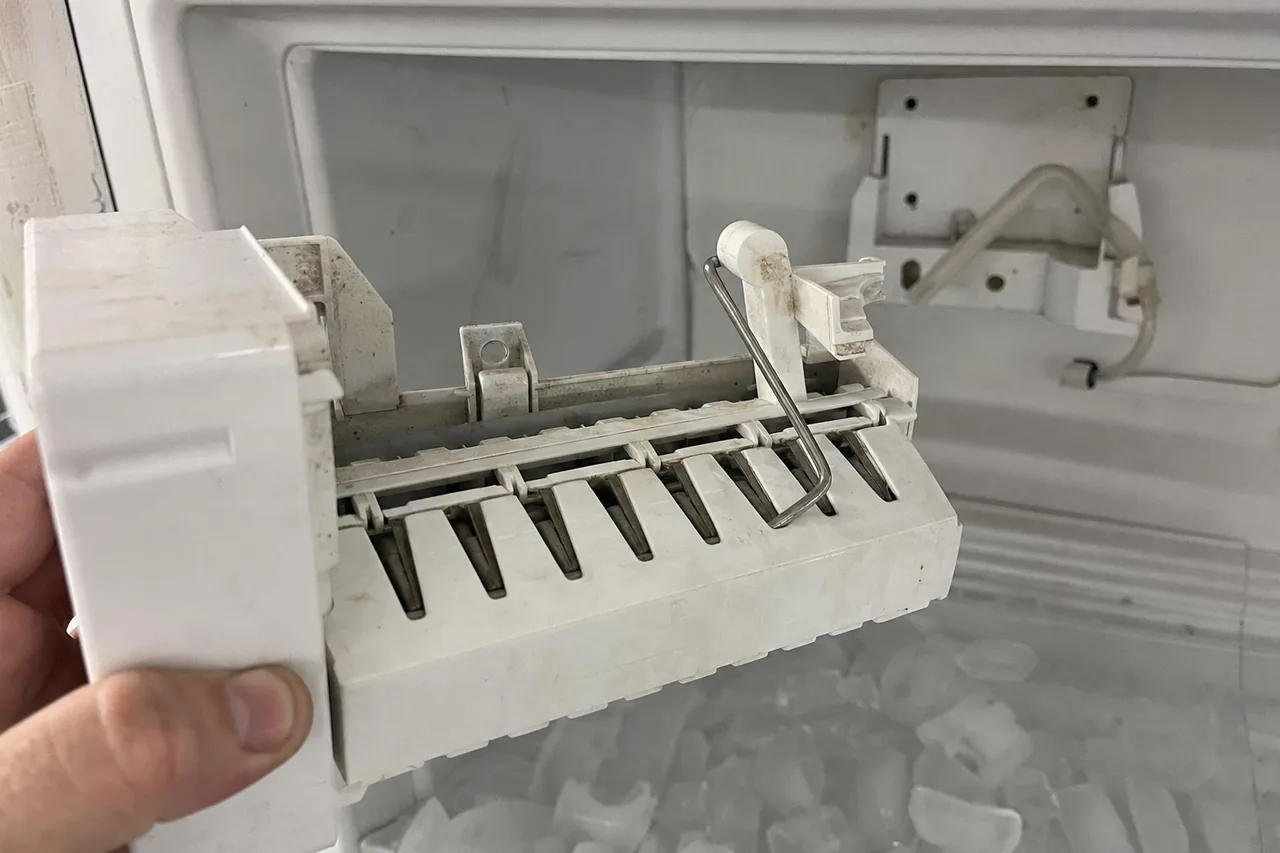
Short ice-maker fills. The fill valve meters water by time rather than by volume, so anything that restricts flow shortens the fill without producing an error. You get hollow cubes, then cubes fused into a slab, then a mold that stops harvesting cleanly. A water filter left in past its life is the cheapest possible cause and the first thing we check because it costs nothing to rule out. A partly closed shutoff and a kinked or crushed supply line come next. Only after those do we condemn the valve or the mold, and on a machine that has been short-filling for a long time both usually go together — replacing one and leaving the other means a second visit for the same complaint.
Salt air on the condenser. Within a mile or two of the water — the 32084 and 32080 ZIPs included — condenser fins take on a grey fur that is corrosion product, not dust. It insulates exactly the surface that is supposed to shed heat, so the compressor runs longer, the fresh-food side drifts warm, and the whole cabinet works harder in a Florida August. Cleaning the condenser twice a year is the cheapest thing anyone on the coast can do for a built-in.
Control faults that arrive after the storm rather than during it. The area averages roughly 68 thunderstorm days a year, and the county has had multi-day outages after the larger events — Matthew in 2016, Irma in 2017, Helene in 2024. The pattern afterwards is not an appliance destroyed on the day. It is a control board that quits two or three weeks later, or an inverter-driven compressor that begins short-cycling in the same window, because the damage is cumulative and the last transient is only the one that finished it. That timing is why so many people tell us the refrigerator was fine after the storm. It was.
We take box temperatures at both compartments, check condenser and evaporator approach, read the defrost circuit, and confirm airflow before touching refrigerant. Most warm-refrigerator calls are airflow, defrost or a fan, not a charge problem, and it is worth ruling those out first because they are cheaper to fix.
The logic is straightforward. If the freezer holds and the fresh-food side does not, the sealed system is producing cold and something is failing to move it — an evaporator fan, a damper, a duct blocked by frost, or a defrost circuit that has stopped clearing the coil. If both compartments drift warm together and the compressor runs without satisfying, then the sealed system is genuinely in question and we test it properly.
If the sealed system is at fault, you get the finding in writing along with an honest view of whether the repair is worth it against the age of the cabinet. Built-in refrigeration is generally worth repairing well past the point where a freestanding unit would not be, because the cabinetry was built around it — but there is a limit, and we will tell you when a machine has reached it.
Water under the crisper is almost always a drain, not a leak. The evaporator’s defrost water has a path to a pan under the cabinet, and when that path ices or silts up the water finds the floor of the compartment instead. Clearing and re-routing the drain properly, including the heater loop where one is fitted, fixes it for good. Mopping it out does not.
Frost building on the back wall of a freezer is the related fault: a defrost heater, thermostat or control that has stopped running its cycle. Left alone it blocks the air path and eventually presents as a warm fresh-food compartment, which is why the two complaints so often arrive together.
Wine storage runs on the same sealed-system principles with much tighter tolerances, because the point of the appliance is holding a narrow band rather than getting cold. Drift of a few degrees matters. The common causes are a thermistor out of calibration, a door seal that has taken a set, or a condenser that cannot shed heat in an undercounter opening with insufficient clearance — that last one is a design problem we can identify but not repair.
Flat $80 diagnostic credited toward the repair, written estimate before any part is ordered, genuine OEM parts, 90 days on labor and 365 days on parts.
Completed work, parts and labor together. Most of what we do on this page lands between $430 and $2,520; the $80 visit comes off that once you approve the repair.
| What gets replaced | Parts and labor |
|---|---|
| Refrigeration column sealed system | $850–$2,520 |
| Control board or touch panel | $430–$1,090 |
Before any of that
$80
Flat $80 diagnostic covering the visit and the full diagnostic sequence, credited toward the repair once you approve the work.
You get a written estimate before any part is ordered or any labor is billed.
Where this comes up
32080
Davis Shores, Marsh Creek and Sea Colony sit between the Matanzas River and the Atlantic. Corrosion is what shortens appliance life on a barrier island.
32095
Palencia kitchens went in with the houses, so most of what we open is somewhere between its first and second decade. That decides what fails and what it costs.
32084
In the 32084 ZIP the coast sets the agenda: corroded condenser fins, seized hinges, and older kitchens that were never wired for what is now in them.
32092
The kitchens here are twenty to twenty-five years old. That one fact predicts most of what we find, and most of what is worth repairing rather than replacing.
4.5
out of 5, across 60 customer reviews. Each one is a single visit, in the words of the person whose kitchen it was.
The freezer drawer would not seal after we had a go at the runners ourselves. He set the drawer square again, renewed the perished gasket and checked the closing force. Our own bodge undone without a word of complaint.
Cordelia B.
It works now, but it took three visits to get there and nobody warned us the part would sit on order that long. The fault was a thermistor reading high. I would use them again with lower expectations about timing.
Hugo V.
The bottom of the refrigerator was freezing lettuce while the top shelf sat warm. A damper had jammed part open. He freed it, measured airflow at each shelf, and the cabinet has held one temperature since.
Winifred T.