Our column ran constantly from the week we moved in. He found the cabinet had been built without the clearance the appliance needs at the top, opened it up, and the run time halved. Not a fault we would ever have found.
Beatrix L.
Mon–Fri 8:00am – 6:00pm Sat 9:00am – 4:00pm
St. Augustine, FL · St. Johns County
Independent Thermador service · St. Augustine, FL
diagnosis
One compartment warm and the other cold is a distribution fault, not a cooling fault. The distinction decides whether the repair costs tens or thousands.
Published August 5, 2026
Diagnosis
A compartment that runs warm while the other side holds is an airflow story far more often than a sealed-system one.
Book a visit
(904) 442-8210Flat $80 diagnostic, credited toward the repair when you approve the work.
Related service
The most common refrigeration call we take is some version of “it is not cooling”, and the single most useful thing a homeowner can tell us is which compartment is affected. That one detail separates a category of repairs that cost tens of dollars from a category that can cost thousands.
A built-in refrigerator does not have two cooling systems. It has one evaporator producing cold, and a set of ducts, dampers and fans that decide how much of that cold goes to the freezer and how much to the fresh-food compartment. Some cabinets use two evaporators, which changes the detail but not the logic.
That architecture makes the diagnosis almost mechanical:
Four things, roughly in order of frequency.
Frost on the evaporator. If the defrost cycle stops running — a failed heater, a failed defrost thermostat, or a control that no longer initiates — frost builds on the coil until it blocks the airflow through it. The freezer survives on proximity for a while; the fresh-food side, which is fed by ducted air, does not. The classic presentation is a fresh-food compartment that gets warmer over several days while the freezer stays hard.
A failed evaporator fan. No fan, no distribution. Often audible, or rather inaudible — a refrigerator that has gone quiet is worth investigating.
A blocked or iced drain. Defrost water that cannot leave freezes in the duct and does the same job as frost on the coil, plus it eventually puts water under the crisper.
Something in the way. A box pushed against the return vent at the back of a compartment does more damage than people expect.
We take real temperatures in both compartments rather than reading the display, because a display reports a set point and a sensor, and the sensor is sometimes the fault. We check whether air is actually moving at the fresh-food inlet. We look at the evaporator directly where the panel allows it, because frost is visible and unambiguous. And we read the defrost circuit.
If all of that is clean and the compartments are still both warm, then we test the sealed system properly. That work requires EPA Section 608 certification, which our technicians hold, and it is the last thing we do rather than the first because it is the most expensive answer and it is very often not the answer.
In coastal ZIPs, add a fifth cause to the airflow list: a corroded condenser that cannot reject heat, which makes the whole cabinet run at the edge and presents as an afternoon-warm fresh-food side that recovers overnight.
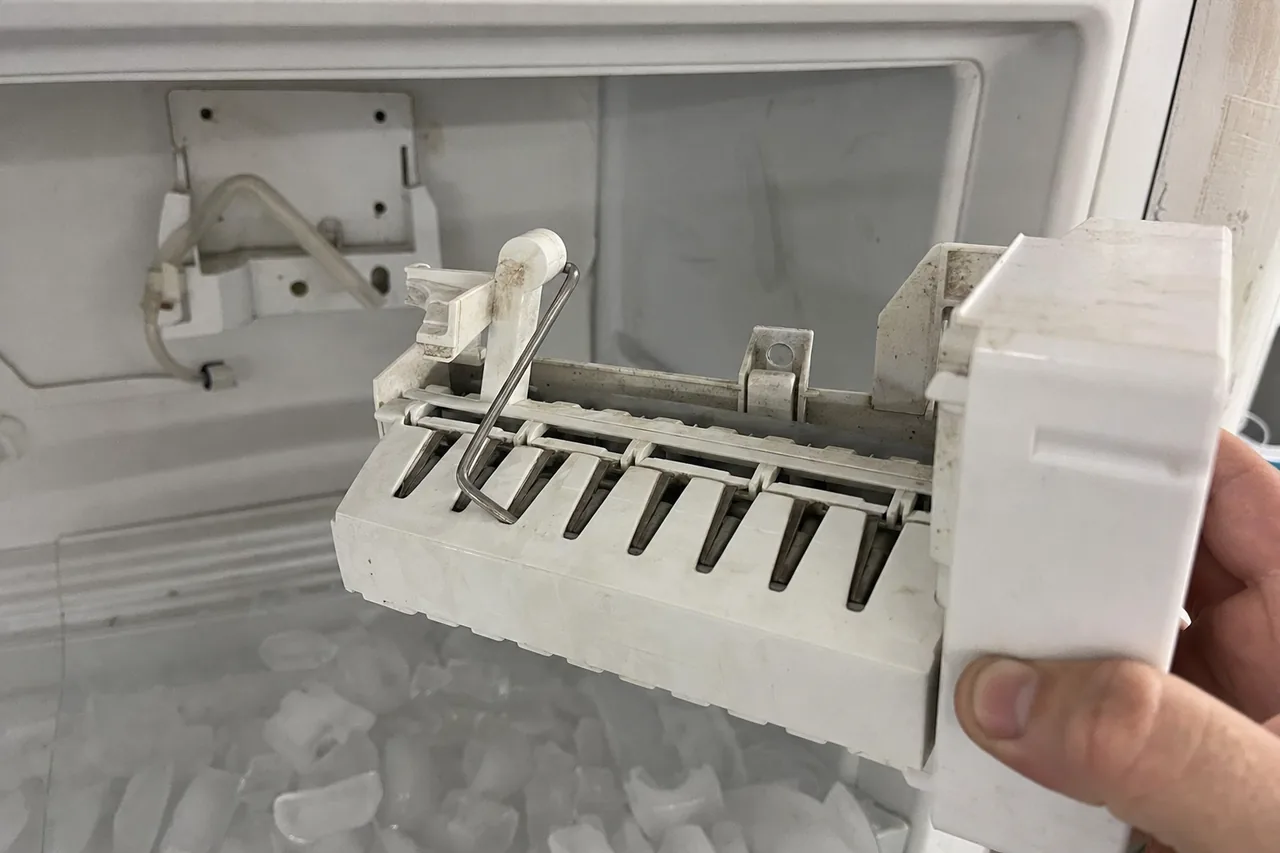
Inland, the complaint that most often arrives alongside a temperature problem is the ice maker — short fills, hollow cubes, a mold that will not harvest. The two are usually unrelated faults that happen to be noticed in the same week, so it is worth mentioning both when you call. That way we bring the parts for each rather than diagnosing one and returning for the other.
Set point, door seal, and whether anything is blocking the vents. Then listen: if the machine is silent, say so. If it has been running without stopping for days, say that instead. Both are diagnostic, both are free, and both change what we put on the van.
Completed work, parts and labor together. Most of what we do on this page lands between $430 and $2,520; the $80 visit comes off that once you approve the repair.
| What gets replaced | Parts and labor |
|---|---|
| Refrigeration column sealed system | $850–$2,520 |
| Control board or touch panel | $430–$1,090 |
Before any of that
$80
Flat $80 diagnostic covering the visit and the full diagnostic sequence, credited toward the repair once you approve the work.
You get a written estimate before any part is ordered or any labor is billed.
4.5
out of 5, across 60 customer reviews. Each one is a single visit, in the words of the person whose kitchen it was.
Our column ran constantly from the week we moved in. He found the cabinet had been built without the clearance the appliance needs at the top, opened it up, and the run time halved. Not a fault we would ever have found.
Beatrix L.
Wine storage crept up towards room temperature through the afternoons. He found the condenser packed solid behind the grille and one fan blade clipped. Cleaned out, blade renewed, and it holds through the hottest part of the day.
Philippa N.
Our ice tasted of the cupboard and half the cubes came out hollow. He replaced the fill valve, flushed the line and reset the harvest timing. Clear cubes again, and he explained what the water here does to that valve.
Miriam T.